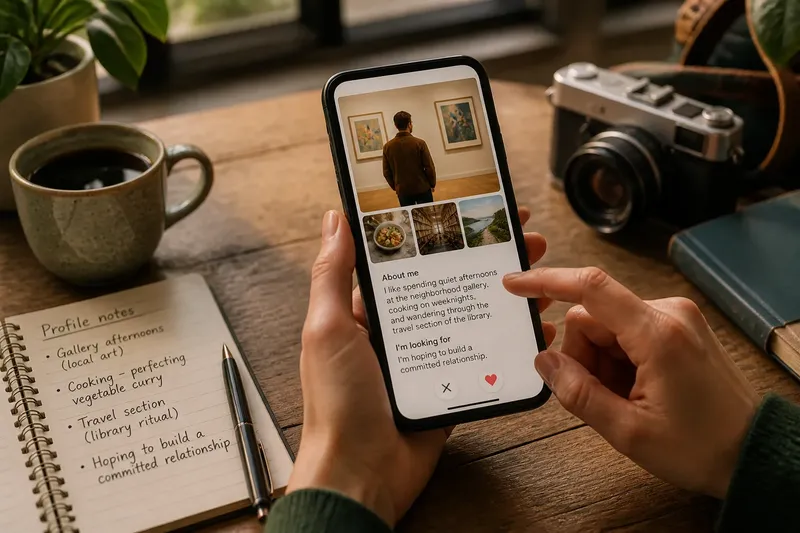
The Shared-Hobby Shortcut
Shared hobby compatibility is less about matching labels than understanding how each person likes to spend time, so you can choose better first plans.

Shared hobby compatibility depends less on naming the same pastime than on wanting a similar kind of time together. Two people may both list hiking, yet one hopes for a quiet walk and the other for a demanding climb; the label alone cannot tell them whether an outing will suit both.
What does shared hobby compatibility actually tell you?
A shared interest is useful information about how someone spends time, but its meaning depends on the person. Ask what they enjoy, how often they do it, and whether they want a partner involved.
Those details matter because the same activity can serve different purposes. One person might take pottery classes to learn a skill, while another goes for the relaxed company and conversation. Neither motive is more valid; they simply point toward different kinds of plans.
Which details make an interest more revealing?
Listen for the practical shape of the activity: its pace, setting, social energy, and degree of structure. “I like cycling” becomes easier to discuss when someone says they prefer calm routes, ride with a friend, or stop along the way.
- Company: Does the person prefer a group, one companion, or time alone?
- Pace: Do they like an unhurried outing or a brisk challenge?
- Planning: Do they enjoy a set schedule, or prefer deciding as they go?
- Purpose: Is the appeal learning, relaxing, socializing, or building a skill?
- Frequency: Is this a regular commitment, an occasional treat, or something they hope to try?
These are conversation cues, not a compatibility score. They help two people see whether the activity can fit their schedules and temperaments without assuming that a shared label settles the question.
How can you turn a shared interest into a useful first plan?
Start with a specific, low-pressure invitation that leaves room for different preferences. A short visit to a gallery, an easy walk, or a beginner-friendly class can make it easier to talk without demanding that either person perform expertise.
Imagine both people say they like board games. One prefers learning unfamiliar rules and the other enjoys familiar games with room to chat. They could choose a simple game and agree to keep the evening casual; if the first person wants a more competitive session, they can instead pick a different activity or save that style of play for another time.
Notice the response as well as the choice. Enthusiasm, questions, and a counterproposal can help clarify what feels comfortable; polite agreement without interest may be a reason to suggest another kind of date.
What should you ask about shared hobby compatibility?
What do you enjoy most about it?
This invites a personal answer rather than another activity label. The response may point to the process, the setting, the people, or the sense of progress.
How do you like to spend that time?
Someone may prefer a scheduled class, a quiet solo session, or an improvised outing. The format can matter more than the hobby’s name when choosing a plan.
Would you want a partner to join in?
Some people enjoy sharing most interests; others prefer to keep certain activities for friends or private time. Treat either preference as information about boundaries, not as a test of affection.
What makes an outing feel satisfying?
One person may value a physical challenge, while another cares most about conversation and a relaxed pace. Their answers can help shape an outing that feels worthwhile to both.
When can different interests fit better?
Different pastimes can coexist when both people respect the time and enthusiasm the other invests. A regular runner and a museum enthusiast do not need to join each other’s activities to show interest; they can ask about the experience and plan around commitments.
There is a difference between declining an activity and dismissing the person who enjoys it. If one partner does not want to join a running club, a warm question about the route or a considerate plan around the club meeting can still communicate respect.
How should a matchmaker present a shared interest?
Describe the texture, not just the category. Instead of saying two people love travel, explain that one enjoys making an itinerary while the other likes leaving afternoons open. Each can then decide whether that difference sounds appealing.
Keep interests separate from assumptions about character. Two people may enjoy the same sport for different reasons, and two people who volunteer in different settings may share a concern for their community. An introduction can offer these details as conversation openings without promising chemistry.
What else do people ask about shared hobbies?
Does a shared hobby mean two people are compatible?
No. It gives them one possible source of common plans, but their preferred pace, boundaries, and reasons for enjoying it may differ.
Should a couple do every hobby together?
No. A shared activity can be enjoyable, while separate interests can preserve personal time and friendships. The useful question is whether both people respect how the other chooses to spend that time.
What if one person is more experienced?
Talk about what each person wants from the activity before making a plan. A beginner-friendly option may suit both, while separate sessions may be preferable if one wants instruction and the other wants a demanding challenge.
How do you use shared interests without overreading them?
Shared hobby compatibility is a prompt to ask better questions, not a shortcut to certainty. Find out what a person enjoys, what kind of company they want, and whether they would like to share the activity at all.
For the first invitation, choose a format that leaves both people room to respond honestly. A good matchmaker offers a clear starting point; the two people decide together whether the actual experience feels right.